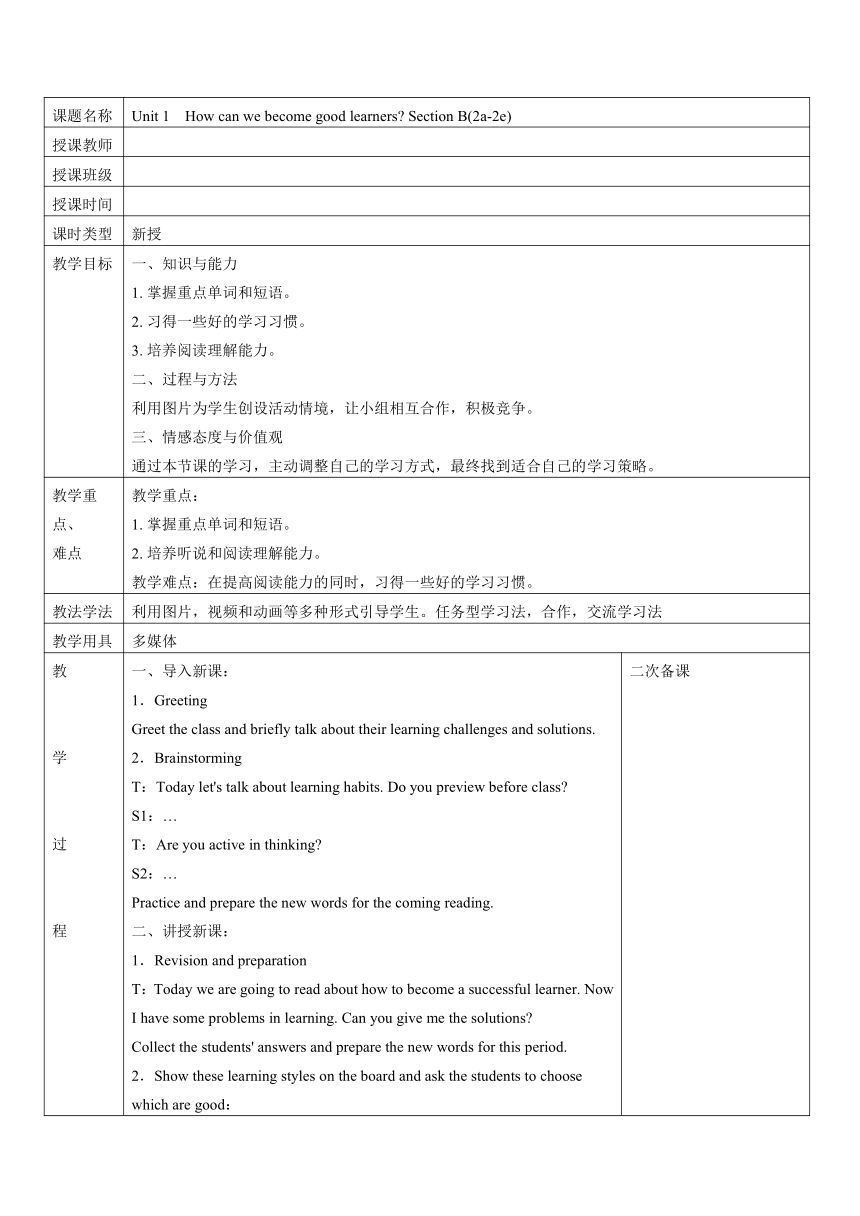
资源简介 课题名称 Unit 1 How can we become good learners Section B(2a-2e)授课教师授课班级授课时间课时类型 新授教学目标 一、知识与能力 1. 掌握重点单词和短语。2. 习得一些好的学习习惯。3. 培养阅读理解能力。 二、过程与方法 利用图片为学生创设活动情境,让小组相互合作,积极竞争。 三、情感态度与价值观 通过本节课的学习,主动调整自己的学习方式,最终找到适合自己的学习策略。教学重点、 难点 教学重点: 1. 掌握重点单词和短语。2. 培养听说和阅读理解能力。 教学难点:在提高阅读能力的同时,习得一些好的学习习惯。教法学法 利用图片,视频和动画等多种形式引导学生。任务型学习法,合作,交流学习法教学用具 多媒体教 学 过 程 一、导入新课: 1.Greeting Greet the class and briefly talk about their learning challenges and solutions. 2.Brainstorming T:Today let's talk about learning habits. Do you preview before class S1:… T:Are you active in thinking S2:… Practice and prepare the new words for the coming reading. 二、讲授新课: 1.Revision and preparation T:Today we are going to read about how to become a successful learner. Now I have some problems in learning. Can you give me the solutions Collect the students' answers and prepare the new words for this period. 2.Show these learning styles on the board and ask the students to choose which are good: 二次备课Be active in thinking,pay too much attention to the knowledge of grammar,connect something new with knowledge and experience you already have,review well what you have learned,lack concentration in class or when doing homework,feel nervous about making mistakes… Then next 1.Finish the task in 2a ①Work in groups. What are good learning habits ②Write down the learning habits we can think of. 2.Finish the task in 2b ①Read the passage quickly and see if there are any of the habits in our prehend the whole passage. ②Copy the habits appearing in the passage. And answer which four habits of successful learners they can find. ③Read the passage again aloud. Learn the new words and expressions and show how to use them. ④Discuss these habits. Get the class to use proper reading strategy-rapid or leaping reading. 3.Finish the task in 2c 4.Finish the task in 2d 5.Finish the task in 2e 三、课堂检测: Translate the following sentences into English. (1)每个人都生来就具有语言能力。 ___________________________________________________________ (2)成功的学习者普遍拥有一些良好的习惯。 ___________________________________________________________ (3)熟能生巧。 ___________________________________________________________ (4)天气若不很冷,我总是开着窗户睡觉。 (5)你能依靠她来应付(deal with)这种局面。 四、拓展延伸: 1. be interested in sth. / doing sth. 很感兴趣的;关心的 (1) –ed :修饰人,描述人的声音、表情或感受 (2) –ing :修饰事物,描述事物的状态或性质 类似的还有:interested 感兴趣的 interesting 令人感兴趣的disappointed 失望的 disappointing 令人失望的 bored 感到无聊的 boring 无聊的 excited 兴奋的 exciting 令人兴奋的 eg:I’m not really interested in politics. 我对政治不是很感兴趣。 2.unless 连词,“ 除非,如果不” ,引导条件状语从句,含有否定意义,相当于if … not 。 eg: I shall go to the supermarket unless it rains. = I shall go to the supermarket if it doesn’t rain . 五、课堂小结: 本节课通过学习2b部分的课文,对阅读技巧尤其在略读有了更好的理解,有助于学生在以后的阅读部分能够更快更高效的完成阅读,其次,学习了本篇文章,也掌握了以下知识点: Phrases: depend on/ upon; unless ; have sth. in common (with sb./ sth.); be interested in sth./ doing sth. ; pay attention to Four habits of successful learners: (1) Creating an interesting in what they learn (2) Practicing and learning from mistakes (3) Developing their study skills (4) Asking questions课后作业 1.Read aloud the passage in 2b three to five times until fluently and learn the new words and expressions in it. 2.Finish synchronized workbook板书设计 How can we become good learners Section A(2a-2e) be born with,depend on,in common,pay attention to,connect…with He succeeded by trying many times and learning from his mistakes. Use it or lose it. Practice makes perfect. Knowledge comes from questioning. You're never too old to learn.课后反思 展开更多...... 收起↑ 资源预览
 资源预览
资源预览
 资源预览
资源预览